- Wednesday October 7th, 2026
- "It Is Not A Question of Who Is Right Or Wrong But What Is Right Or Wrong That Counts."
- --Geoff Metcalf
- Providing an on line Triage of the news since 1998
My son has narrated the last book I wrote.
Please consider listening to it and encouraging others to do so too.
(Click on Book Cover)
World & Nation
Israel Marks 3 Years Since Hamas Oct. 7 Attack

Israelis on Wednesday mourned the victims of Hamas' Oct. 7, 2023,
terrorist attack, gathering at massacre sites and memorials three years
after the deadliest day in the Jewish state’s history.
Families and survivors returned to southern Israel, including the site
of the Nova music festival near Reim, where more than 350 people were
killed in and around the festival grounds as Hamas-led terrorists
stormed across the Gaza border.
At 6:29 a.m. — the moment the first rockets were launched three years
ago — relatives embraced and remembered loved ones, NPR reported.
The attack killed about 1,200 people and resulted in 251 being taken hostage, according to Israeli authorities.
Mamdani’s tone-deaf Oct. 7 post attacks Israel for ‘ongoing genocide,’ sparks outrage
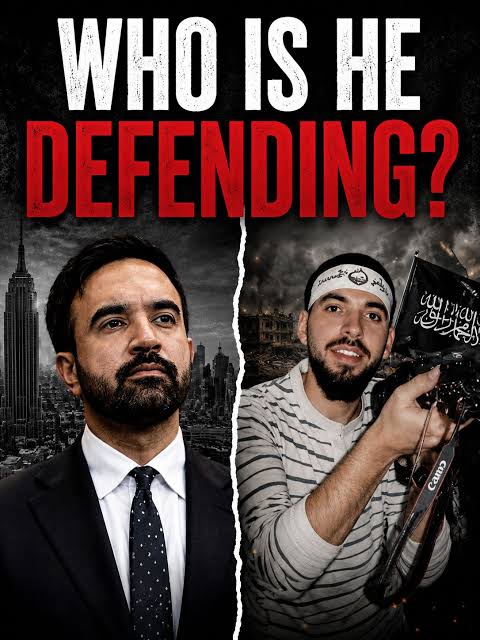
Mayor Zohran Mamdani sparked outrage Wednesday by using the third
anniversary of the Oct. 7 slaughter of Israelis to instead attack the
Jewish state of “war crimes” in an “ongoing genocide.”
Hizzoner dedicated less than a quarter of his statement to the
“unthinkable loss” suffered when “Hamas killed more than 1,100 Israelis
and abducted 251 others” — with the vast majority instead devoted to
his ongoing attacks on Israel.
“Three years later, we must refuse to accept a world in which
occupation and apartheid continue, where war crimes are met with
impunity, and our federal government continues its complicity with
every arms shipment,” said Mamdani.
The biased statement by the mayor — already widely criticized for
making Jewish New Yorkers feel unsafe with his ongoing attacks on
Israel — was quickly met with horror.
Macron trashes American free speech as riots grip France — internet unloads: 'Enormous fool'

French President Emmanuel Macron is drawing fierce online backlash
after criticizing the American conception of free speech and arguing
that liberty requires a "common framework" — remarks landing as his
government faces mounting pressure from nationwide student protests,
school blockades and clashes with riot police across France.
"The so-called American ‘free speech’ today, which some people have
promoted, is the opposite of free speech," Macron said at Complutense
University in Madrid during a discussion on democracy, youth and the
digital age on Sept. 29, according to a translation of his remarks.
Macron argued that free speech is not absolute and must be bounded by
the rights of others and respect for public order, while also arguing
that the flow of information must maintain a relationship to truth. He
compared those limits to restrictions against assaulting or insulting
others or destroying public property.
Trump: Call With Putin Scheduled to Discuss Russia's Possible Plague Case

President Donald Trump said Tuesday he would speak very
soon with Russian President Vladimir Putin over the reported plague
death of a laboratory technician, as Washington pressured Moscow for
transparency.
Russian authorities denied that they were imposing anti-plague measures
and played down the reports of an incident at an anti-plague institute
in Siberia's Irkutsk region last week.
But Washington is showing growing concern, with Secretary of State Marco Rubio calling on Russia to be open about the situation.
"We encourage Russia to be transparent and share more information with
the world so that all of us could react accordingly and appropriately,"
Rubio said during a trip to Iceland.
Cornell student informs cops that frat bros told her to keep ‘orgy’ secret: ‘Bad for our image’

A female Cornell student told campus cops early in the investigation
into an alleged gang rape that fraternity brothers held secret meetings
to cover up the “orgy” because it “would be bad for our image,” newly
obtained videos show.
The unidentified woman was one of several students seen talking to
officers early in the investigation into Jane Doe’s allegations that
she was drugged and raped at a fratenrity party.
“Chi Phi held a meeting essentially to get all of the men on the same
page about what happened,” the student told campus police, according to
ABC News, which blurred her face and transcribed what she said without
using audio that could identify her..
Dems’ latest Trump attack backfires as frequent critics refuse to play along
CNN's Daniel Dale and others pushed back on viral clips from a Nebraska rally they say were taken out of context

Some of President Donald Trump’s most frequent media critics are
turning on Democrats’ latest attack on the president, rejecting claims
that Trump suggested Iran should "take out" Los Angeles and San Diego.
"Trump's point here is that if he didn't start a war with Iran, then
San Diego and LA would be at risk from nuclear war," wrote The Atlantic
writer Michael Scherer on X.
Trump was discussing the war with Iran and the threat of Tehran
obtaining a nuclear weapon during a Nebraska rally on Monday before
invoking Los Angeles and San Diego.
"They can take out a city. Let them take out Los Angeles. Let them take
out San Diego. This is a very small price to pay," Trump said.
The remarks quickly triggered a fight over what Trump meant, with
Democrats and multiple media outlets characterizing them as a
suggestion that Iran be allowed to attack the two California cities.
Violent Offenders Paroled Under Va. Gov. Spanberger
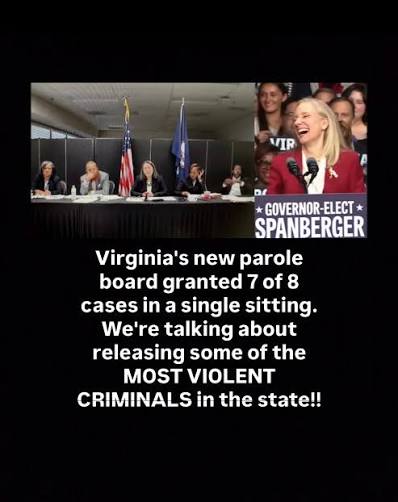
Virginia Gov. Abigail Spanberger's newly appointed parole board has
released murderers and violent sex offenders at a sharply higher rate
than the board serving under her Republican predecessor, according to
reports.
Six murderers and 11 sex offenders — including seven rapists and two
child predators — have been granted parole during the Democrat
governor's first months in office, according to a Washington Examiner
analysis of state parole records published Wednesday.
Spanberger installed the board in mid-March. Its reported 13.89%
release rate is more than 10 times the 1.23% approval rate recorded in
all of 2025 under former Gov. Glenn Youngkin, the Examiner reported.
Among those granted release was Clarence Eugene Billups, 71, who was
convicted in 2023 of raping a child under 13 while already on parole
for two previous rape convictions.
SCOTUS slams door on Dem judge’s career fight after years of pro-Biden Facebook posts
Former Philadelphia Judge Mark Cohen lost his pension after dozens of politically charged Facebook posts from 2021 to 2022
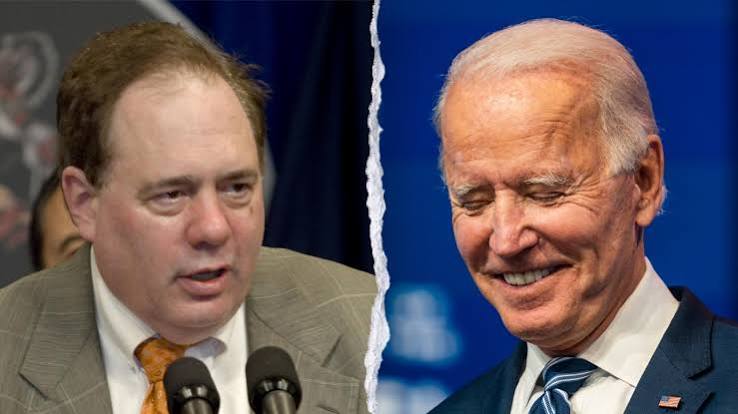
The Supreme Court declined Monday to hear an appeal from a former
Pennsylvania judge who was suspended after repeatedly posting partisan
political content on Facebook, including praise for former President
Joe Biden and his policies.
Former Judge Mark Cohen, a former Democratic state lawmaker who began
serving on the Philadelphia Court of Common Pleas in 2018, made dozens
of politically charged Facebook posts while on the bench, even after
being warned to stop. Cohen appealed to the Supreme Court in April,
with his lawyers arguing that the former judge’s First Amendment rights
had been violated.
"Allowing judges to be disciplined based on the perceived ‘tone’ or
‘volume’ of lawful speech promotes arbitrary enforcement, invites
political interference in the judicial branch, and threatens to
undermine the rule of law," Cohen’s lawyer told Law.com at the time.
"This case presents an urgent opportunity for the court to restore
constitutional clarity and reestablish the First Amendment’s protection
of the rights of sitting judges to speak on matters of public concern."
Hezbollah Gets $200 Million From Iran to Help Displaced

Hezbollah has received $200 million from Iran to help Lebanese
displaced by this year's war with Israel, two people with direct
knowledge of the transfer said, the first significant aid from the
group to supporters who bore the brunt of the conflict.
Hezbollah received the cash last month despite a tightening U.S.
economic chokehold on Iran and increasing difficulties in getting funds
to Tehran's Lebanese ally, said the people.
Intermediaries who moved the money charged a 20% fee, reflecting the
risks of dealing with the group, they said. One said this was four
times the normal fee.
Trump Derangement: No, he didn’t ask Iran to attack LA or San Diego
By New York Post Editorial Board
California Democrats just hit a damning new low, bewailing how
President Donald Trump supposedly invited Iran to nuke Los Angeles and
San Diego.
As LA Mayor Karen Bass and others chimed in, Gov. Gavin Newsom posted:
“The President is advocating for an attack on 10+ million U.S.
residents in two of America’s largest cities.”
He added: “This is not normal. None of this is” — when in fact it’s an all too normal case of Trump Derangement Syndrome.
From Dems’ accounts, you’d guess Trump had at least made some tasteless
joke; after all, he did just give out a GOP senator’s personal cell
number just because the guy won’t agree to end Daylight Savings Time.
But no; it’s a straight-up smear.
Eco-warriors want to turn up the heat on your wallet to fund their climate agenda
State climate superfund statutes, federal legislation and dozens of lawsuits, target energy companies
By Daniel Turner , E.J. Antoni
New report warns climate lawsuits could cost households roughly $1,465 a year
If you think your energy bills are high now, just wait until the
climate activists get their way. They’ve launched a massive, nationwide
campaign of lawfare which, if successful, would raise the average
household’s annual energy bill by almost $1,500 per year and nearly
$15,000 over a decade. The Supreme Court is currently hearing one such
case (Suncor Energy Inc. v. County Commissioners of Boulder County).
The campaign essentially has three avenues of attack: tort litigation,
state "climate superfund" statutes and federal legislation. Each
category represents enormous charges on upstream suppliers which, of
course, will then move downstream to households at the pump and the
meter.
Over 30 lawsuits demand that energy companies pay for unproven impacts
on global climate change, with filings by 11 states, D.C. and dozens of
cities. New York and Vermont simply legislated this liability into
existence through climate superfund laws — the former capped at $75
billion with the latter leaving liabilities uncapped.